
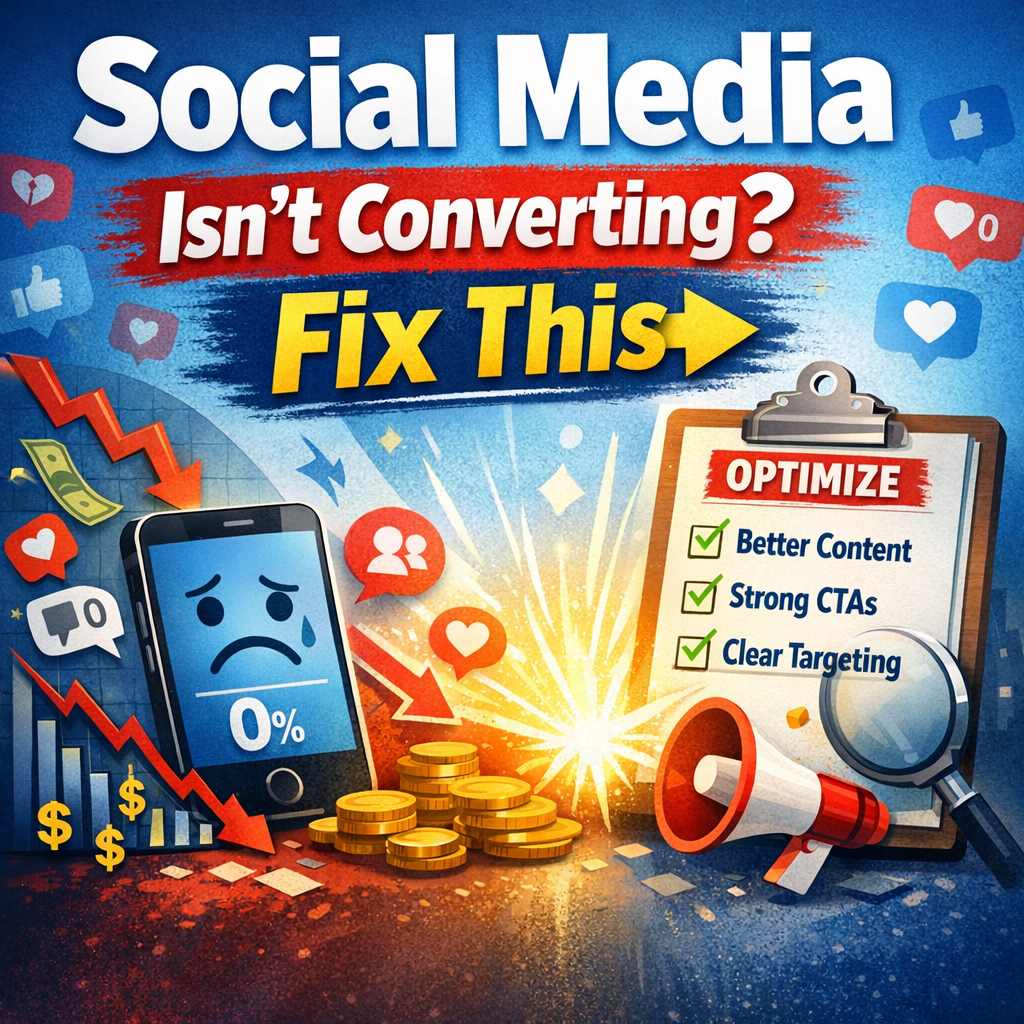
If you’re posting every day and still seeing little to no sales, you’re not alone. For a lot of service businesses, the real problem is not content volume — it’s that the content is built for attention, not conversion. In 2026, social media is crowded, AI-generated noise is everywhere, and “good engagement” no longer guarantees leads. That’s why so many business owners are asking the same thing: why is social media not converting? The answer usually comes down to strategy, offer clarity, and what happens after someone follows you. In this article, we’ll break down why social media leads often stall, what’s broken in most social media strategy for business, and what to fix before you post again so your content can actually drive calls, inquiries, and sales.===
Contents
- 1 Why Social Media Isn’t Converting Today
- 2 What to Fix Before You Post Again
- 3 Why Social Media Isn’t Converting in the AI Era
- 4 Social Media Strategy for Business That Actually Converts
- 5 Real-World Application for Local Businesses
- 6 Common Mistakes to Avoid
- 7 Pro Tips for Better Social Media Sales
- 8 Tools & Tech Stack That Help
- 9 Want This Done for You?
- 10 FAQs
- 10.1 Why is my social media not converting?
- 10.2 How long does it take to turn followers into customers?
- 10.3 Is social media worth it for small businesses?
- 10.4 What type of content converts best?
- 10.5 Do I need to post every day?
- 10.6 What tools should I use to improve results?
- 10.7 Can AI help with social media marketing?
Why Social Media Isn’t Converting Today
Social media engagement is not the same as sales
A lot of business owners mistake likes, comments, and shares for progress. But high engagement does not automatically mean high revenue. You can have strong visibility and still have weak conversion if your content is entertaining but not persuasive, or if it attracts the wrong audience.
This is one of the biggest reasons social media not converting happens. The platform may be doing its job, but the message is not. If your posts are broad, vague, or inconsistent, people may enjoy them without ever seeing a clear reason to contact you.
For service businesses, that gap is expensive. Views do not pay the bills. Calls, booked appointments, and qualified leads do.
Most accounts are built for reach, not intent
Many brands post with the goal of “staying active,” but activity alone does not create demand. If your content is designed only to get attention, it often attracts casual scrollers instead of ready buyers. That’s why social media leads can stay low even when your page looks busy.
The issue is usually intent. A person who likes a post about “5 tips for better plumbing maintenance” is not necessarily ready to hire a plumber today. If your content does not guide them toward a next step, they leave with no action taken.
This is why why social media not working is often the wrong question. The better question is: what is the content actually asking people to do?
The buyer journey is longer now
Today’s buyers do not usually see one post and buy immediately. They compare, search, check reviews, visit your website, and often wait for a reason to trust you. That’s especially true for local businesses and service providers where the purchase feels personal or high-stakes.
If your social media strategy for business does not support that full journey, conversion drops. Your post may create interest, but your website, offer, follow-up system, or CTA may fail to carry that interest forward.
That is why social media sales are often weak even when the content looks polished. The problem is not one thing. It’s usually a broken chain.
What to Fix Before You Post Again
Clarify the offer before you create content
If people cannot tell what you do, who you help, and why they should choose you, your content will struggle. Before you post again, tighten your offer. Make it simple, specific, and outcome-driven.
Instead of saying, “We help small businesses grow,” say, “We help local service businesses get more qualified leads from SEO, Google Ads, and email follow-up.” That message is easier to understand and much easier to trust.
This matters because convert followers to customers starts with clarity. People do not buy confusion. They buy a clear solution to a specific problem.
Build content around buyer problems, not business updates
Most low-converting content is too centered on the business and not centered enough on the buyer. Posts about your team, office, process, or company milestones may be fine for brand warmth, but they rarely drive action on their own.
If you want better social media leads, focus on the questions your buyer already has:
- How much does it cost?
- How fast can it work?
- What makes you different?
- What happens next?
- Is this worth it for my business?
When your content answers real concerns, it becomes a sales asset instead of just a post.
Use a stronger path from post to inquiry
Even great content fails if the next step is weak. If someone likes your post and lands on a generic profile with no offer, no proof, and no direction, they stop there.
Every piece of content should lead somewhere simple:
- a service page
- a lead magnet
- a booking page
- a contact form
- an email signup
- a low-pressure audit or estimate
This is where social media not converting often gets fixed fast. You do not need more content. You need a better journey from attention to action.
Why Social Media Isn’t Converting in the AI Era
AI has made average content easier to produce
In 2026, everyone can publish faster. AI tools have lowered the barrier to creating posts, captions, videos, and graphics. That means the market is flooded with content that sounds polished but says very little.
This makes differentiation harder. If your messaging looks and sounds like everyone else’s, your audience scrolls past it. People are not short on content. They are short on trust and relevance.
That is why social media not converting is becoming more common. The content volume is up, but buyer attention is down.
Personalization now matters more than frequency
Posting every day is not a strategy if the content feels generic. AI-era marketing rewards specificity. People want to feel like you understand their exact situation.
A plumber’s audience does not need the same message as a dentist’s audience. A real estate agent’s buyer pain is different from a coach’s. The more your content speaks to one audience, one pain point, and one result, the better it converts.
This is where AI can help if used correctly. It can speed up research, content outlines, and follow-up, but it should not replace your positioning. The businesses that win use automation to move faster and personalization to stay relevant.
Speed and follow-up are now part of conversion
In the old model, a lead might wait days for a response. Today, people expect quick answers. If your content drives interest but your response is slow, you lose the lead before the conversation even starts.
This is another hidden reason why social media not working is often really a follow-up problem. If someone comments, DM’s, or clicks through and gets no immediate next step, momentum dies.
Fast automation, clear email follow-up, and simple lead capture now matter as much as the post itself.
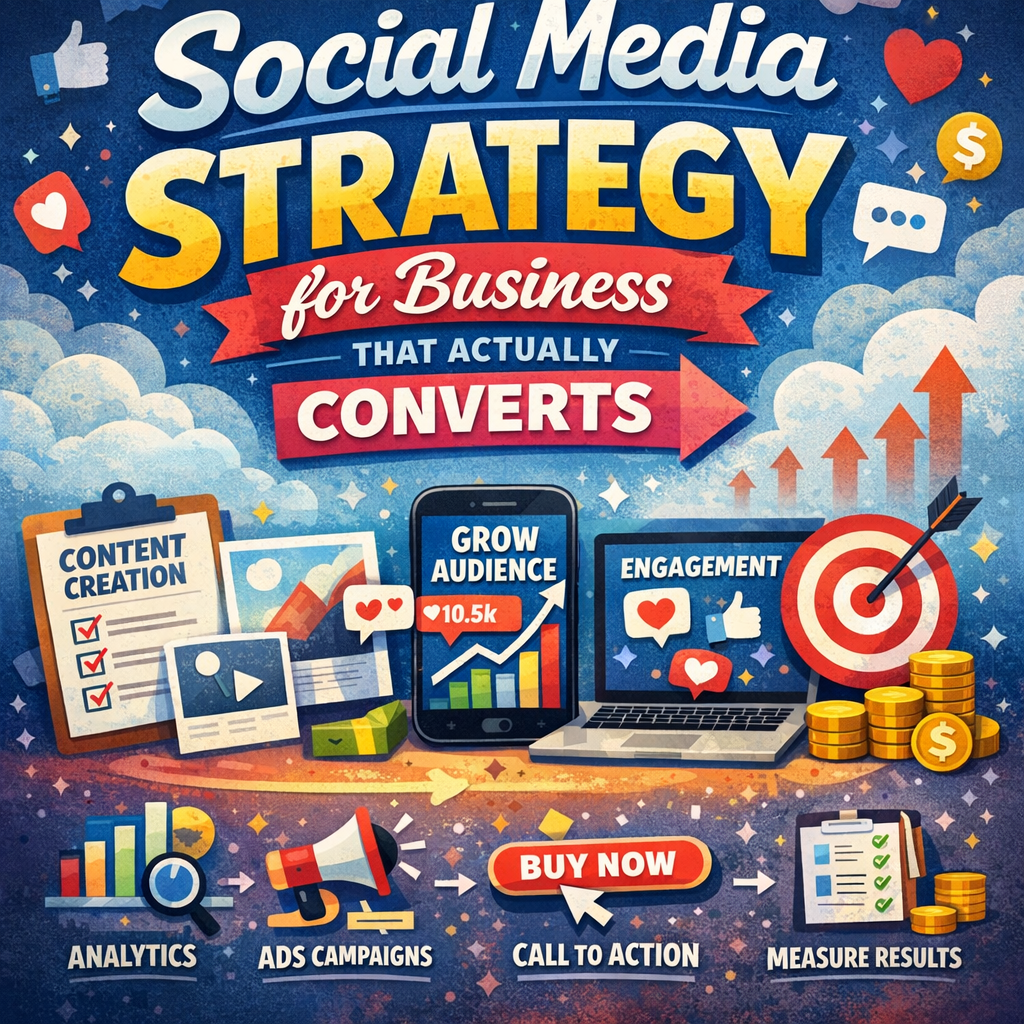
Social Media Strategy for Business That Actually Converts
Start with one clear audience
The fastest way to improve conversion is to stop speaking to everyone. Pick one audience and make your content feel built for them.
A local HVAC company should not post the same way as a business coach. A dentist’s audience cares about trust, comfort, and convenience. A realtor’s audience wants market insight and confidence. A coach’s audience wants transformation and proof.
When you narrow the audience, your social media strategy for business gets stronger. Messaging becomes sharper, offers become easier to understand, and social media sales improve because the right people finally feel seen.
Match content to the stage of awareness
Not every post should try to close the sale. Some content builds awareness. Some builds trust. Some drives action. If you only post “buy now” content, your audience may not be ready.
Use a mix like this:
- Awareness: quick tips, myth-busting, common mistakes
- Trust: testimonials, case studies, behind-the-scenes proof
- Conversion: offers, audits, consultations, special incentives
This helps you convert followers to customers without sounding pushy. The process feels natural, because each post has a job.
Social media alone is rarely enough. You need a system that captures attention and carries it forward. That usually means a strong website, a useful landing page, and an email sequence that nurtures leads after they opt in.
This is the biggest shift most businesses need to make. Social media should not be the whole strategy. It should be the entry point.
If someone is interested but not ready, email keeps the conversation going. If someone is ready, your site should make the next step obvious. Together, those assets improve social media leads and reduce waste.
Real-World Application for Local Businesses
A plumber needs urgency, trust, and a simple CTA
A plumber does not need viral content. They need content that builds trust and creates urgent action. A post about “3 signs your water heater is about to fail” works because it solves a real problem and points to a service.
The conversion path should be simple: problem, solution, proof, call to action. Add a short form, a clear phone number, and fast follow-up. That’s how social media becomes a lead source instead of a vanity channel.
For service businesses, social media not converting often means the message is too broad and the offer is too buried.
A dentist needs reassurance and proof
Dentists often lose conversions because their content feels too clinical or too promotional. People want to feel safe before they book. They want reviews, before-and-after examples, and clear explanations.
A post about cosmetic dentistry should not just educate. It should answer the unspoken question: “Can I trust this practice?” That’s how you move from interest to action.
This is a strong example of how social media leads improve when content matches emotional intent, not just factual information.
Coaches and consultants often post a lot but still see weak conversion because the offer is too abstract. “Helping people grow” is not enough. Growth in what? For whom? Through what system?
Specificity sells. Show the exact problem you solve, the exact result you help create, and the exact process. Then direct people to a lead magnet, email list, or strategy request.
That approach turns a social media strategy for business into a real pipeline rather than a content calendar.
Common Mistakes to Avoid
- Posting without a clear offer
- Relying on likes instead of lead tracking
- Using generic content that could fit any business
- Sending traffic to a weak website or profile
- Forgetting to include a next step
- Posting too much educational content and too little proof
- Ignoring email follow-up
- Expecting social media to close sales on its own
- Targeting everyone instead of one buyer type
- Changing strategy before giving it enough time
These mistakes are often why social media not converting becomes a repeated frustration instead of a fixable problem.
Pro Tips for Better Social Media Sales
Use content that pre-qualifies buyers
One of the smartest moves is to make your content filter the audience for you. Talk directly to the people you want and be clear about who your service is for and not for. That saves time and improves lead quality.
For example, instead of saying, “We help all businesses grow,” say, “We help local service businesses book more qualified leads without relying on referrals alone.” That message attracts the right people and repels the wrong ones.
This is one of the most effective ways to convert followers to customers without sounding aggressive.
Let AI speed up execution, not replace strategy
AI is useful for outlines, content repurposing, and follow-up sequences. It can help you move faster, but it should not decide your message. Your positioning, proof, and offer still need a human point of view.
The best use of AI is behind the scenes:
- research search intent
- generate content variations
- summarize testimonials
- draft email follow-up
- automate lead routing
That makes your social media strategy for business more efficient without making it generic.
Track the right metrics
Do not measure success only by likes or impressions. Track:
- profile visits
- link clicks
- form fills
- calls
- booked appointments
- email opt-ins
- lead-to-sale conversion rate
That is how you know whether social media leads are actually becoming revenue.
Tools & Tech Stack That Help
If you want social content to convert better, use tools that support the full funnel:
- SEO tools: Ahrefs, Semrush, Google Search Console
- Email tools: Mailchimp, Klaviyo, ActiveCampaign, ConvertKit
- Paid ads: Google Ads, Meta Ads
- Automation: Zapier, Make, HubSpot
- Content planning: Notion, Trello, Airtable
- Analytics: GA4, Looker Studio
- Website support: WordPress, Webflow, Shopify, Framer
The goal is not more tools. It’s a cleaner system that helps you social media not converting less often by capturing and following up on interest better.
Want This Done for You?
If your content is getting attention but not sales, the fix is usually not “post more.” It’s better messaging, a clearer offer, and a stronger path from follower to lead.
Want this mapped out for your business? We can send you a simple plan — no meetings needed. Just clear next steps, a practical content direction, and the fastest opportunities to improve conversion.
FAQs
Usually because the content is built for engagement, not intent. The offer may be unclear, the audience too broad, or the next step too weak.
How long does it take to turn followers into customers?
It depends on your offer and follow-up system. Some businesses see results in days with strong targeting, while others need weeks or months of consistent nurturing.
Yes, if it supports lead generation. Social media works best when it drives traffic to a website, email list, or booking page.
What type of content converts best?
Content that solves buyer problems, shows proof, and includes a clear call to action. Case studies, FAQs, testimonials, and problem-solving posts usually perform well.
Do I need to post every day?
No. Consistency matters more than volume. A few high-quality, conversion-focused posts can outperform daily generic content.
What tools should I use to improve results?
Use SEO tools for research, email tools for follow-up, automation tools for lead capture, and analytics tools to track conversions.
Yes. AI can speed up research, drafting, repurposing, and automation. But strategy, positioning, and proof still need human oversight.
Social media fails to convert when the strategy stops at visibility. If you want more leads, you need clarity, proof, and a simple path from post to action. That means speaking to the right audience, solving real problems, and supporting your content with a strong website and follow-up system. In 2026, the businesses that win are not the ones posting the most — they’re the ones making every post count. If your social media is getting attention but not customers, now is the time to fix the system, not just the content.
We would love to hear from you!
Contact us about your digital marketing needs and let's team up to grow multi-folds together!