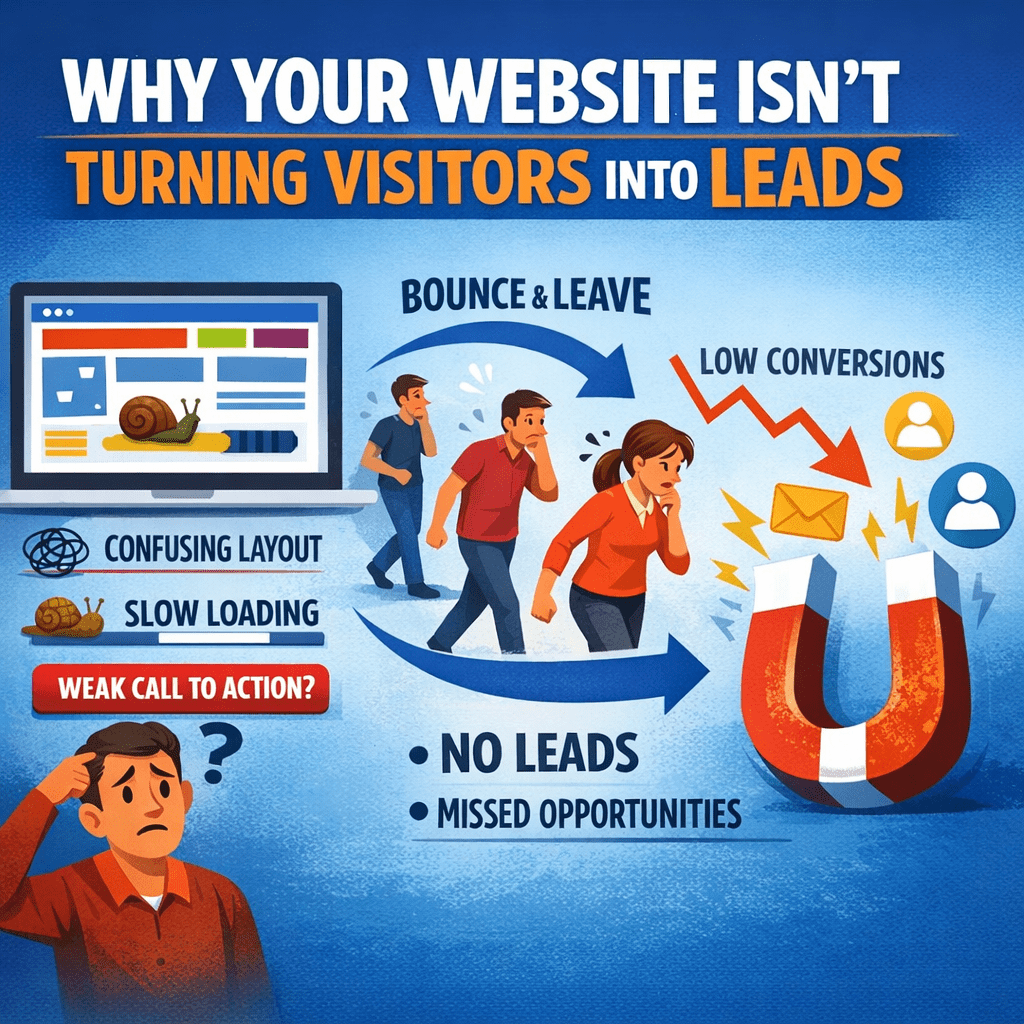
Your website can look polished, modern, and expensive — and still not generate a single lead. That’s the frustrating reality for a lot of service businesses right now. Traffic is more expensive, attention spans are shorter, and AI has made it easier than ever for competitors to move fast. If your site is getting visitors but your phone isn’t ringing, the problem usually isn’t “more traffic.” It’s a conversion problem. In other words, your website not converting leads is almost always a sign that something in the message, offer, or structure is getting in the way. The good news: those gaps are fixable, and often faster than business owners think.
Contents
- 1 Why Your Website Isn’t Converting Visitors into Leads
- 2 Quick Answer: Why Visitors Don’t Become Leads
- 3 Why This Matters in 2026
- 4 1. Fix the Message Before You Fix the Design
- 5 2. Make Trust Easy to See
- 6 3. Remove Friction From the Conversion Path
- 7 4. Build Pages That Match Real Buyer Intent
- 8 5. Real-World Application for Local Businesses
- 9 Common Mistakes to Avoid
- 10 Pro Tips Most Agencies Don’t Tell You
- 11 Tools & Tech Stack That Help
- 12 Internal Linking Opportunities
- 13 Want This Done for You?
- 14 FAQs
- 14.1 Why is my website not generating leads?
- 14.2 How do I improve website conversions?
- 14.3 How long does website conversion rate optimization take?
- 14.4 Is a conversion focused website worth it for small businesses?
- 14.5 What are the biggest website design mistakes?
- 14.6 Do I need a new website to get more leads?
- 14.7 What tools should I use to track conversions?
Why Your Website Isn’t Converting Visitors into Leads
A website not converting leads usually means visitors are confused, unconvinced, or not ready to take the next step. They may like what they see, but they do not see enough value, clarity, or trust to contact you. That is why good-looking websites often underperform. Design matters, but conversion-focused website strategy matters more.
The most common reason why website not generating leads is simple: the site was built to impress, not to persuade. Many service business websites focus on fonts, colors, and layout first, while ignoring the buyer journey. If a visitor cannot quickly understand what you do, who you help, and why they should choose you, they leave.
Website conversion rate optimization is about removing friction and making the next step obvious. That means clearer headlines, stronger calls to action, better proof, faster load times, and a cleaner path to contact. If your site is getting traffic but no inquiries, the issue is rarely one thing. It is usually a mix of weak messaging, poor structure, and missed trust signals.
Quick Answer: Why Visitors Don’t Become Leads
Most websites fail to turn visitors into leads because they do not answer three fast questions: What do you do, is it for me, and why should I trust you? If that is unclear in the first few seconds, people bounce.
To improve website conversions, make your offer obvious, remove distractions, show proof, and make contacting you easy. The best conversion focused website does not rely on clever design. It relies on clarity, speed, and trust.
Why This Matters in 2026

In 2026, attention is more expensive and competition is sharper. AI has made content creation, ad copy, and even basic website builds faster and cheaper, which means more businesses are competing for the same eyeballs. If your site does not convert, you are wasting traffic that cost time or money to acquire.
AI also changed user expectations. Visitors now expect instant clarity, personalized experiences, and quick answers. If your website feels slow, generic, or vague, it loses to competitors that communicate better and move faster.
That is why website conversion rate optimization is no longer optional. Whether you get traffic from Google, ads, social media, or referrals, your website has to do more than exist. It has to guide, reassure, and convert at the point of interest.
1. Fix the Message Before You Fix the Design
Your headline needs to say exactly what you do
Most website design mistakes start at the top of the page. If your headline sounds vague, clever, or broad, visitors have to work too hard. A strong homepage headline should tell people what you do, who you help, and what result they can expect.
For example, “We build websites” is weak. “Conversion-focused websites for local service businesses that need more calls” is much better. It is specific, useful, and easy to understand.
Your offer should match the visitor’s intent
A visitor landing on your site wants a next step, not a brand story. If they are looking for plumbing help, legal services, or marketing support, they want proof that you can solve their problem. This is where many sites lose leads. They talk about themselves before they answer the visitor’s question.
Your offer should be obvious above the fold and repeated throughout the page. If your service is high value, make the next action low friction. “Get a free plan,” “Request a quote,” or “See what’s broken” often works better than forcing a commitment too early.
Clarity beats creativity
Creative copy can help branding, but clarity drives leads. People do not convert because a website is clever. They convert because it feels safe, relevant, and easy to act on. If your site is not generating leads, simplify the language and reduce decision fatigue.
2. Make Trust Easy to See
Visitors look for proof fast
People do not buy from a website just because it looks nice. They buy when they believe you can deliver. That means your site needs testimonials, case studies, reviews, numbers, and real-world proof placed where people can see them quickly.
For service businesses, trust signals matter even more. A dentist, plumber, coach, or real estate agent may only get one shot to make the right impression. Strong proof can increase website inquiries by making the visitor feel more confident before they click.
Use real examples, not generic claims
Claims like “We’re the best” or “Top-rated service” do not move people much unless they are backed by specifics. Use measurable proof instead. Show before-and-after results, average response times, client outcomes, or local reputation markers.
If you do not have many testimonials yet, use smaller trust builders. Add team photos, service area details, certifications, warranties, years in business, and clear contact information. These details reduce uncertainty and improve website conversions.
Put trust signals near the action
A lot of sites bury proof at the bottom. That is too late. Put reviews near forms, CTA buttons, and service sections. If someone is about to contact you, they should not have to search for reassurance. Make trust visible where decisions happen.
3. Remove Friction From the Conversion Path
Too many choices kill action
One of the most common website design mistakes is giving visitors too many exits. Multiple menus, several CTA buttons with different messages, and unnecessary links can pull attention away from the main goal. When people are unsure what to do next, they usually do nothing.
Pick one primary action per page. If the goal is leads, make that clear. Your homepage should not compete with five different priorities. Guide the visitor toward one simple next step.
Forms should be short and easy
Long forms reduce conversions fast. If you ask for too much information too soon, people hesitate. Keep forms lean unless the service requires detail. In many cases, name, email, phone, and a short message are enough.
You can always gather more details later. The first goal is contact. The second goal is qualification. If your website is not converting leads, the form itself may be part of the problem.
Speed matters more than most owners think
A slow website quietly kills leads. Visitors expect pages to load quickly, especially on mobile. If your site is sluggish, they leave before they ever read your offer. This is one of the simplest fixes with one of the biggest payoffs.
Compress images, reduce bloated scripts, and test your site on mobile. Fast websites feel more trustworthy and more professional. They also help improve website conversions across every traffic source.
4. Build Pages That Match Real Buyer Intent
One page should solve one problem
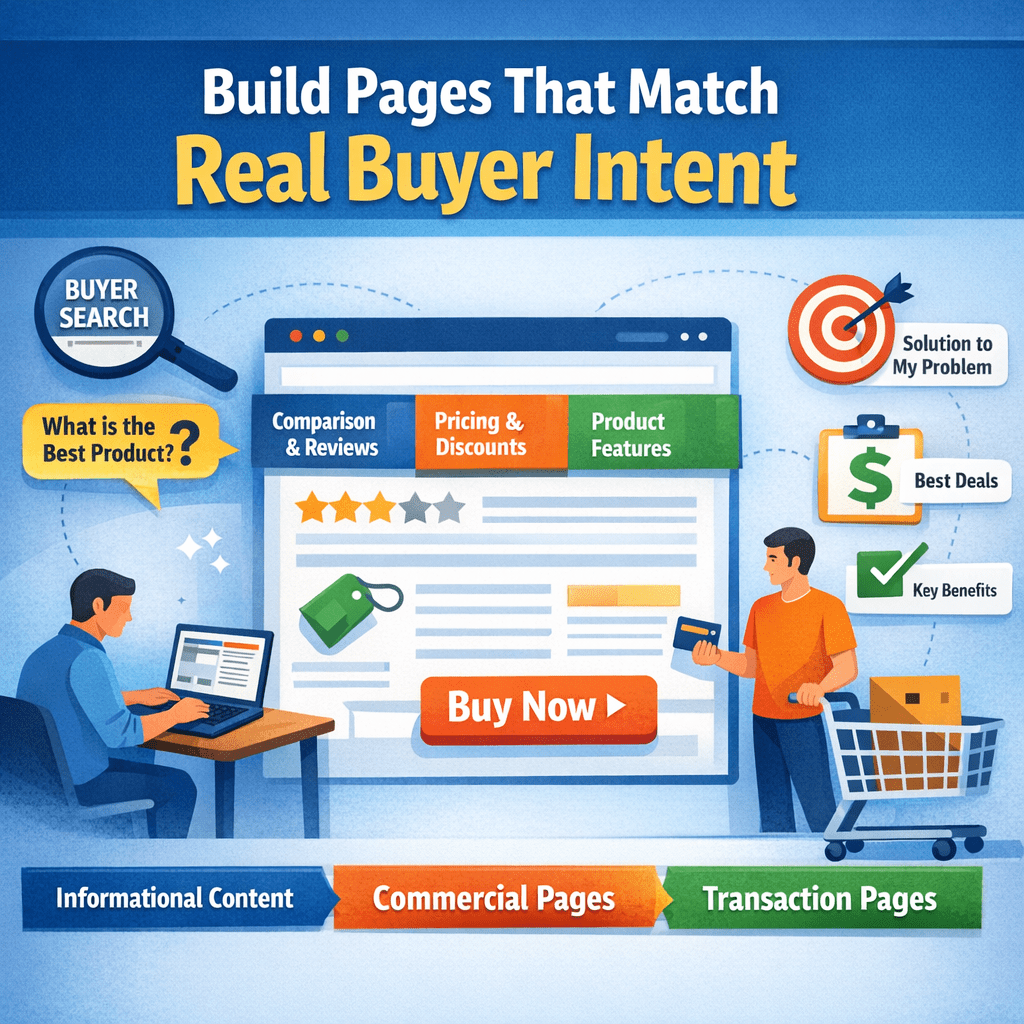
A conversion focused website does not try to say everything at once. It creates pages that match what the visitor is looking for. A homeowner looking for emergency plumbing help needs a different page than a business owner researching ongoing maintenance.
That is why service pages, location pages, and industry pages matter. They let you speak directly to different audiences instead of forcing one generic message. When the page matches the search intent, the lead quality usually improves too.
Match content to the customer’s stage
Some visitors are ready now. Others are comparing options. Others are just researching. Your site should help all three, but with different paths. Give ready buyers a clear CTA, give cautious buyers proof, and give researchers a helpful summary of the process.
This is where SEO and conversion strategy work together. Good rankings bring traffic, but the page structure turns that traffic into revenue. If you want to increase website inquiries, the content must match the intent behind each visit.
Lead magnets can help when used correctly
Not everyone is ready to book immediately. In those cases, a useful lead magnet can capture the lead before they leave. This could be a checklist, estimate guide, pricing sheet, or simple assessment.
For example, a coach might offer a short strategy worksheet. A roofing company might offer a storm damage checklist. A local service business can use this to stay in the conversation instead of losing the visitor forever.
5. Real-World Application for Local Businesses
Plumbers and HVAC companies need urgency and trust
For plumbers and HVAC businesses, the website should make it easy to act fast. Clear service areas, emergency numbers, reviews, and simple contact options matter more than fancy copy. People searching for these services often want help now.
If your homepage does not say where you work, what problems you solve, and how fast you respond, you are likely losing calls. A conversion focused website for a local service business should feel immediate, local, and dependable.
Dentists and medical practices need reassurance
Dentists and other patient-focused businesses need trust, clarity, and a calm experience. People are often nervous when choosing a provider. They want to know what to expect, what insurance you accept, and why your practice is worth choosing.
The site should reduce anxiety and make booking feel easy. Clear service descriptions, staff photos, patient reviews, and online scheduling can all improve website conversions. The goal is not to impress. It is to reassure.
Coaches and real estate agents need positioning
For coaches and real estate agents, the challenge is usually positioning. Many websites sound generic, so the visitor cannot tell what makes the business different. If the message is broad, the lead quality suffers.
Specificity wins here. Talk about who you help, what outcomes you create, and what the next step looks like. Whether it is a consultation, a home valuation, or a discovery call, the path should feel simple and low-pressure.
Common Mistakes to Avoid
- Vague headlines that do not explain the offer
- Too many CTA buttons with different goals
- No testimonials, reviews, or case studies
- Long forms that ask for too much too soon
- Slow page speed, especially on mobile
- Generic service pages that do not match intent
- Stock photos that make the business feel less real
- Hidden contact details or hard-to-find phone numbers
- Writing for yourself instead of the visitor
- Sending paid traffic to a weak homepage instead of a focused landing page
Pro Tips Most Agencies Don’t Tell You
The fastest conversion gains often come from small changes, not full redesigns. A better headline, stronger proof, and cleaner CTA placement can outperform a complete visual overhaul. Many agencies sell design first, but conversion rate optimization starts with the message and page flow.
AI can help you move faster, but it should not replace strategy. Use AI to brainstorm copy variations, test headline angles, and identify weak spots in the funnel. Then refine everything with real customer language, not robotic phrasing. The best-performing websites sound human, specific, and useful.
Also, do not send all traffic to the homepage. Use focused pages for ads, local SEO, and email campaigns. Matching the message to the source is one of the easiest ways to improve website conversions and increase website inquiries without spending more on traffic.
Tools & Tech Stack That Help
A solid stack makes optimization easier. For SEO, tools like Google Search Console, Ahrefs, Semrush, or Surfer can help you spot content gaps and ranking opportunities. For conversion tracking, use Google Analytics 4 and Microsoft Clarity to see where people drop off.
For email marketing, platforms like Mailchimp, ActiveCampaign, ConvertKit, or HubSpot can help you follow up automatically. For paid ads, Google Ads and Meta Ads work well when paired with dedicated landing pages. For automation, Zapier and Make can connect forms, calendars, CRMs, and follow-up sequences.
If you want a stronger lead system, pair website design with email marketing, SEO, and paid ads instead of treating them like separate projects. That is how a conversion focused website becomes a real growth asset.
Internal Linking Opportunities
If you are improving your site, it often makes sense to connect related services and content. A page about website not converting leads can naturally link to:
- Website design and development services
- SEO services for local and national growth
- Email marketing and automation support
- Google Ads and Meta Ads management
- Content marketing for search and authority
- Social media support for brand visibility
These internal links help users move deeper into the site and give search engines better context. They also make it easier for visitors to find the next step that fits their needs.
Want This Done for You?
If your site is getting traffic but not producing leads, you do not necessarily need a full rebuild. You may just need sharper messaging, better structure, and a few conversion fixes that remove friction fast.
If you want, we can review your site and send back a clear action plan — no meetings needed. That way you know exactly what is hurting conversions, what to fix first, and where to focus for faster results.
FAQs
Why is my website not generating leads?
Usually because visitors do not quickly understand your offer, do not trust the site enough, or cannot find an easy next step. Weak messaging and poor structure are the most common causes.
How do I improve website conversions?
Start with your headline, calls to action, trust signals, page speed, and form length. Then make sure each page matches what the visitor is looking for.
How long does website conversion rate optimization take?
Some improvements can work in days, especially clearer copy and better CTAs. Bigger gains usually come over a few weeks once you test and refine the page flow.
Is a conversion focused website worth it for small businesses?
Yes. If your site brings in even a small amount of traffic, better conversions can create more calls and leads without increasing ad spend or SEO work.
What are the biggest website design mistakes?
Vague messaging, too much clutter, weak proof, slow pages, and unclear calls to action. Beautiful design does not fix a confusing site.
Do I need a new website to get more leads?
Not always. Many businesses can improve performance with targeted fixes to copy, layout, forms, and trust elements before doing a full redesign.
What tools should I use to track conversions?
Google Analytics 4, Google Search Console, and Microsoft Clarity are a strong starting point. Pair them with CRM or form tracking so you know what turns into leads.
If your website is not turning visitors into leads, the answer is rarely “more traffic.” It is usually a clearer message, stronger trust, and a smoother path to contact. Small improvements in website conversion rate optimization can create real growth without adding more complexity. For service businesses, the goal is simple: make it easy to understand, easy to trust, and easy to act. Do that well, and your website stops being a brochure and starts becoming a lead engine.
We would love to hear from you!
Contact us about your digital marketing needs and let's team up to grow multi-folds together!