If your ads are getting clicks but ads not generating leads is still your reality, the problem usually isn’t the platform, it’s the funnel. In 2026, service businesses are competing in a louder market, with smarter buyers, tighter attention spans, and AI-assisted competitors moving faster than ever. That means running Facebook or Google Ads the old way often leads to wasted spend, weak tracking, and a site that leaks conversions at every step. The good news: when you know where the breakdown is, you can fix it fast. This article breaks down exactly why ads not converting happens, what to check first, and how to turn paid traffic into real leads, calls, and booked jobs without adding more budget.
Contents
- 1 Why Ads Aren’t Generating Leads Now
- 2 Fix the Funnel Before You Spend More
- 3 Why Ads Not Generating Leads in 2026 Is a Bigger Problem
- 4 Common Ad Campaign Mistakes That Kill Leads
- 5 Real-World Application for Local Service Businesses
- 6 Tools and Tech That Help Fix the Funnel
- 7 Internal Linking Opportunities
- 8 Pro Tips Most Agencies Don’t Tell You
- 9 FAQs
- 10 Conclusion
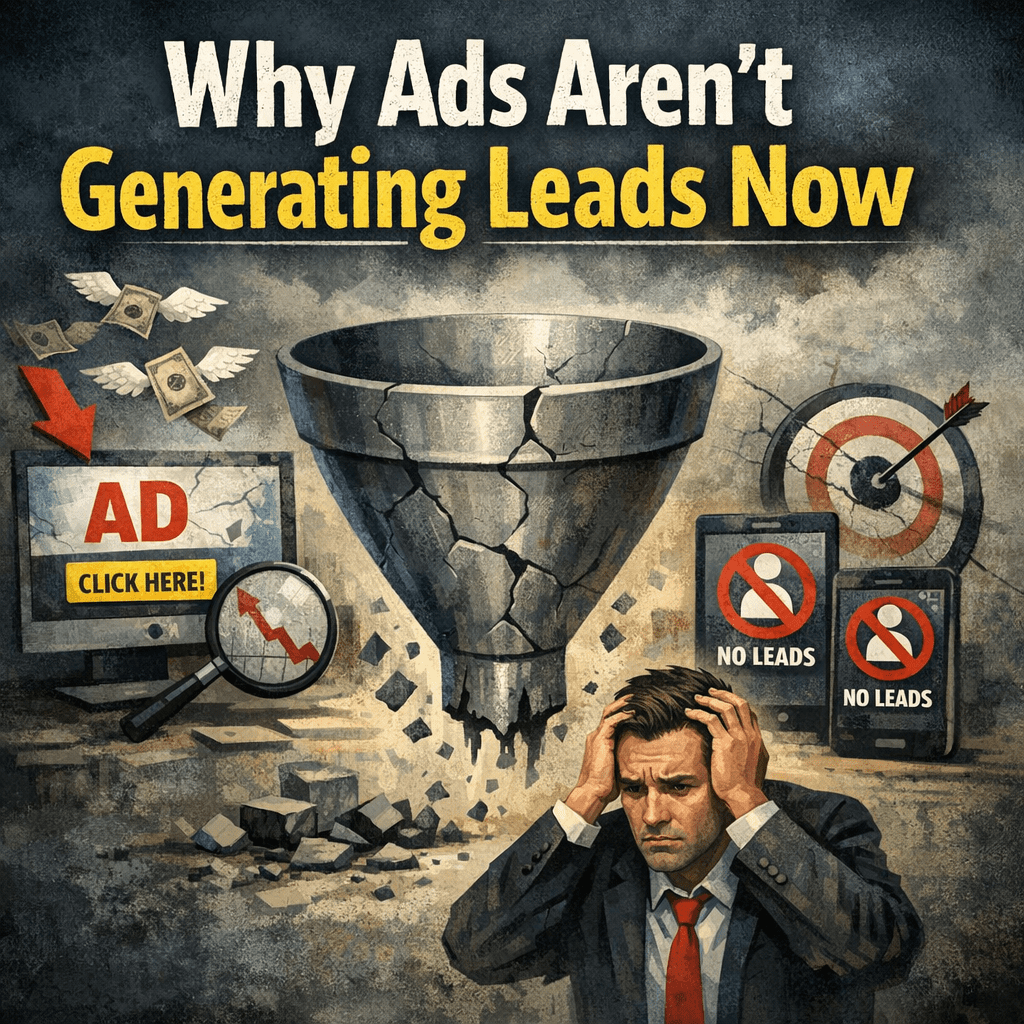
Why Ads Aren’t Generating Leads Now
The quick answer
If your ads not generating leads problem is real, the issue is usually not one thing. It’s typically a mismatch between the ad promise, the landing page, the offer, the audience, or the follow-up process. Strong ads can still fail if the website is slow, the form is clunky, or the lead response is too slow.
For most service businesses, why ads not converting comes down to a broken funnel, not “bad luck.” Fix the message, the targeting, the page, and the follow-up, and you usually improve results without increasing spend.
Your ad is only one part of the system
A lot of business owners think the ad itself is the problem. Sometimes it is. But often the ad is doing its job: it’s getting attention and clicks.
Then the lead disappears because the next step is weak.
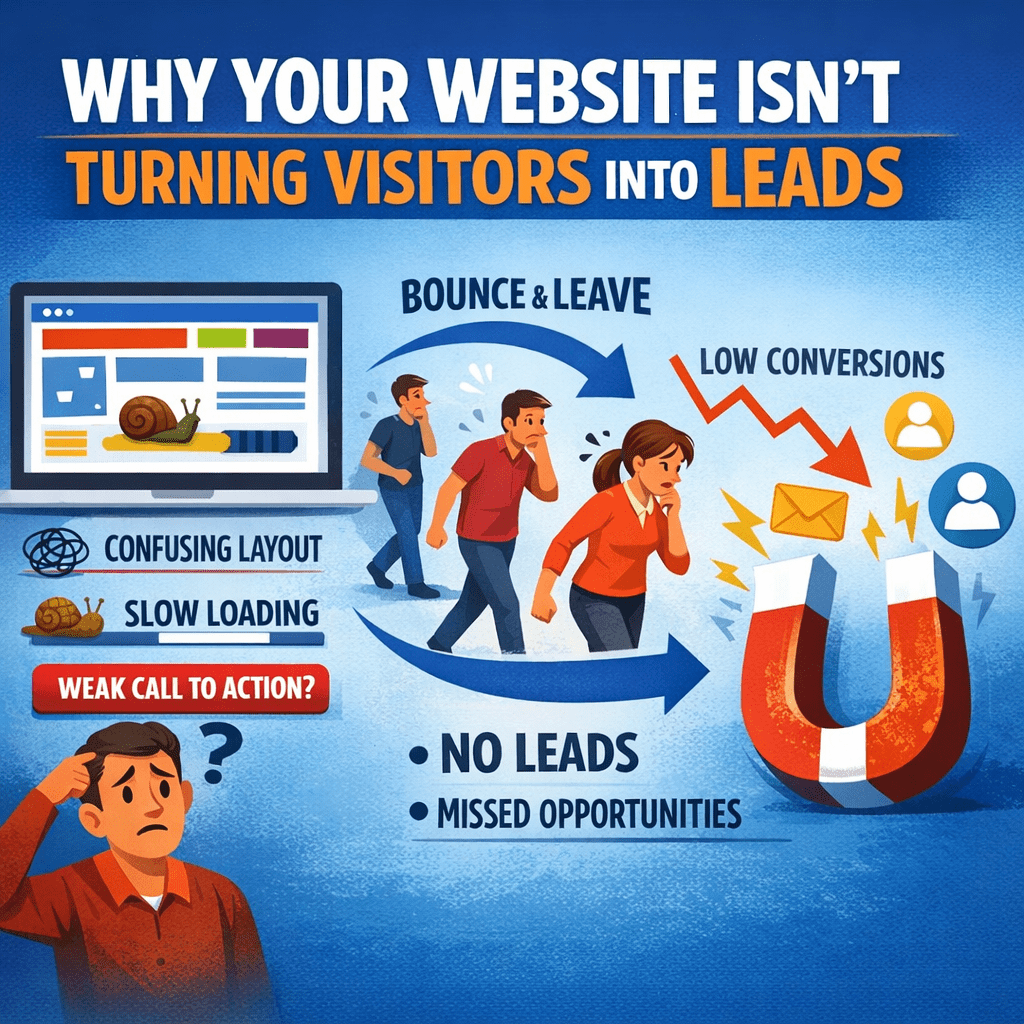
That next step might be a confusing homepage, a vague call to action, a form that asks for too much, or a contact process that feels like work. If people have to think too hard, they leave.
Most lead problems are conversion problems
If you’re seeing clicks but no leads, you likely have a conversion problem. That means the traffic is there, but the offer or page is not convincing enough to produce action.
This is where paid ads troubleshooting starts. Don’t just ask, “How do I get more traffic?” Ask, “What is stopping this visitor from becoming a lead right now?” That question usually reveals the real fix.
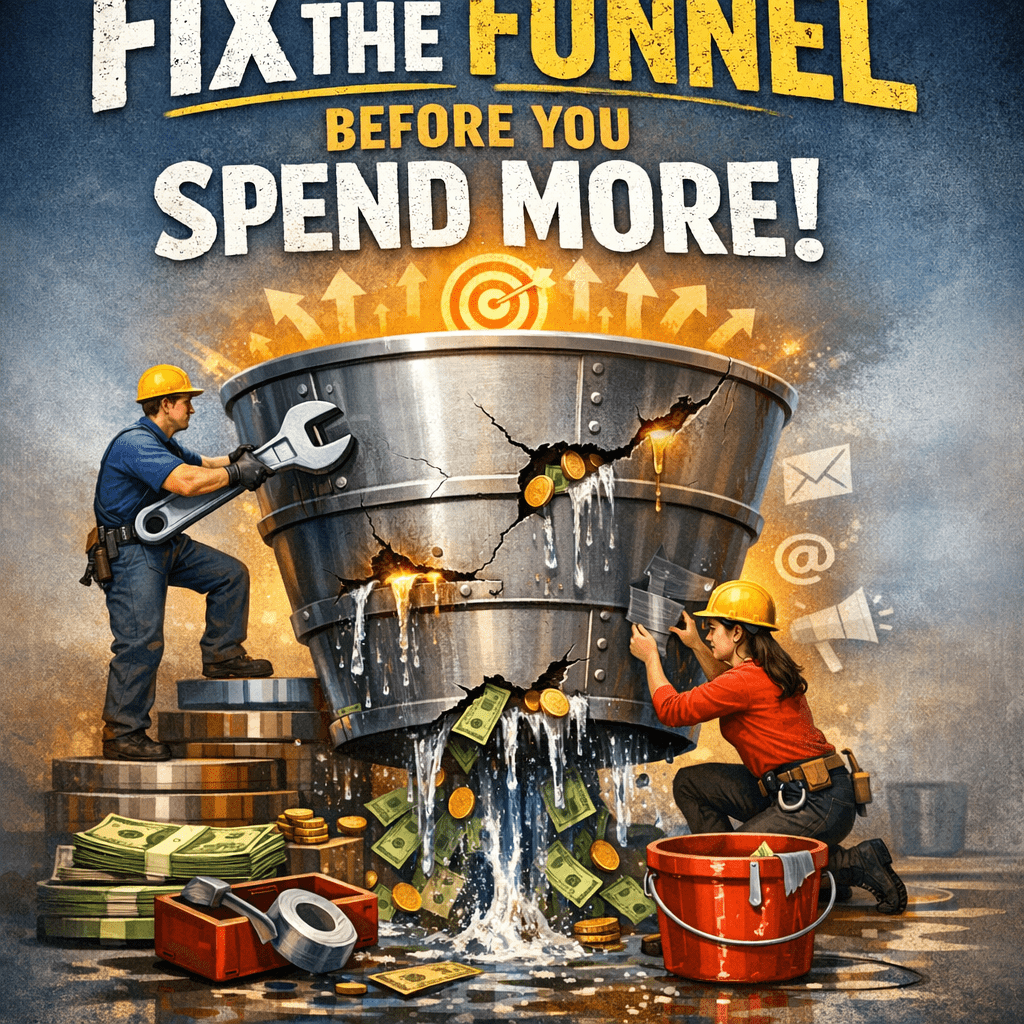
Fix the Funnel Before You Spend More
Step 1: Check the offer first
Before you touch targeting or budgets, look at the offer. People do not respond to “learn more” very well anymore. They respond to clear outcomes.
For service businesses, the offer should answer three things fast: what you do, who it’s for, and what happens next. “Free estimate,” “same-day quote,” and “book your inspection” work better than generic brand language because they reduce friction.
If your offer feels soft, broad, or unclear, that’s one of the biggest ad campaign mistakes.
Step 2: Match the ad to the landing page
A common reason google ads no leads happens is message mismatch. The ad promises one thing, and the landing page says something else.
If your ad says “24-Hour Emergency Plumber in Phoenix,” the page should immediately reinforce that message. The headline, service area, proof, and CTA should all line up. When the visitor feels continuity, trust goes up.
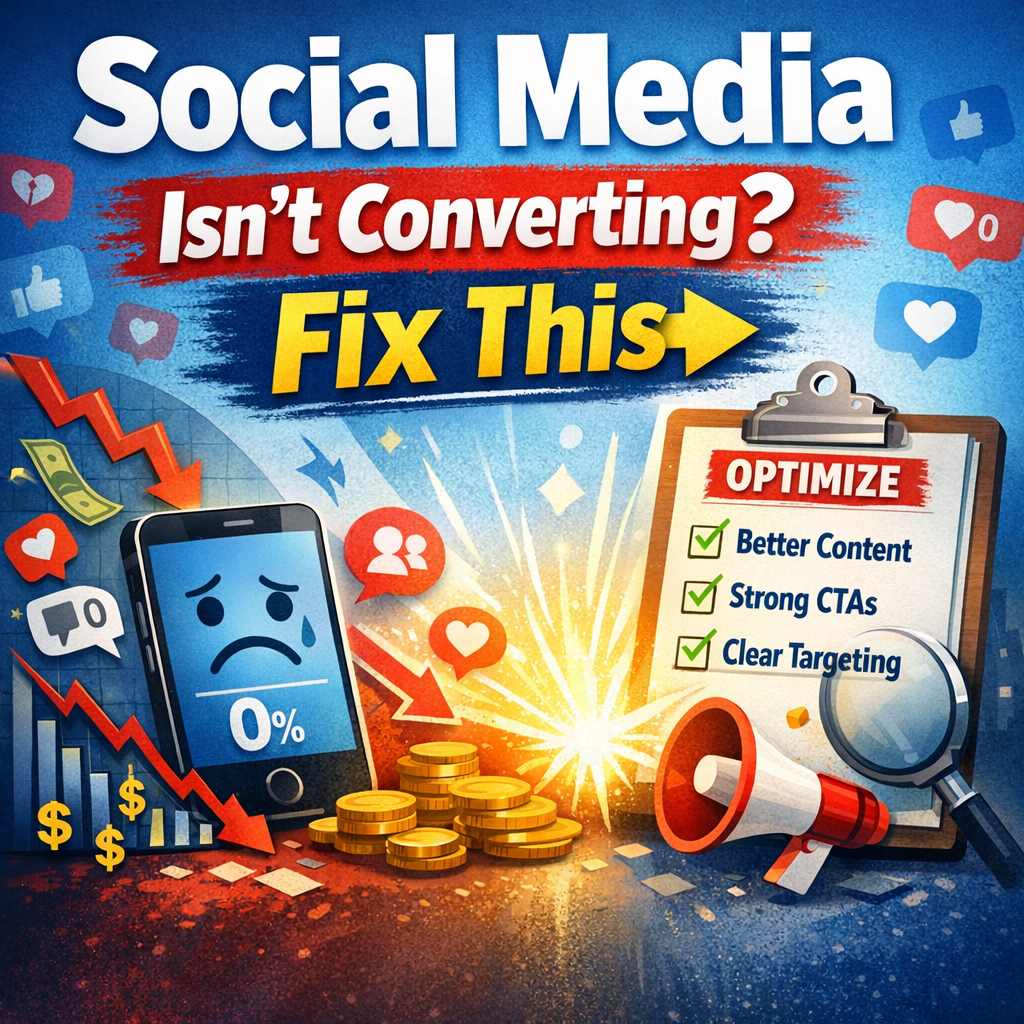
This same rule applies if you want to fix facebook ads not converting. Social traffic needs faster clarity, stronger visuals, and less reading. Search traffic needs intent matching and a direct answer to the query.
Step 3: Remove friction from the conversion path
Every extra step lowers conversions. Long forms, slow pages, hidden phone numbers, and weak mobile design all kill leads.
If someone is on a phone, they should be able to understand the offer in seconds and act in one tap. That means fast load speed, clear CTA buttons, visible phone numbers, and short forms.
To improve ad conversions, simplify the path from click to action. If the lead has to scroll too much, hunt for trust signals, or guess what to do next, you’re losing money.
Step 4: Make follow-up instant
Even a great ad can fail if the lead response is slow. In many service industries, the first company to respond wins.
If someone fills out a form and waits an hour, you may already be out of the race. A fast email, SMS, or call sequence can change everything. This is where automation matters.
Set up immediate follow-up so the lead gets a confirmation, a next step, and a reason to reply now. A simple automation can recover a huge amount of lost revenue.
Why Ads Not Generating Leads in 2026 Is a Bigger Problem
AI has raised the standard
In 2026, your prospects are being trained by AI-generated search results, instant answers, and hyper-personalized content. That means they expect clarity faster than before.
If your ads and landing pages feel generic, they get ignored. If your competitors are using smart segmentation, automated follow-up, and cleaner messaging, they can beat you even with a smaller budget.
This is why why ads not converting is no longer just a media buying issue. It’s a speed, relevance, and trust issue.
Competition is faster and more precise
AI tools allow competitors to test ad copy, build landing pages, and personalize follow-up much faster. That creates a huge gap between businesses using old systems and businesses using modern ones.
The result is simple: the market rewards sharp offers, fast response, and clean execution. Broad campaigns with weak tracking don’t stand a chance for long.
Buyers want proof, not pressure
People do not want a sales pitch first. They want evidence.
That means reviews, case studies, local proof, before-and-after examples, certifications, and clear expectations matter more than ever. If your ad leads to a page full of claims but no proof, the visitor bounces.
For service businesses, trust is the conversion engine. AI may change how ads are made, but it does not remove the need for proof.
Common Ad Campaign Mistakes That Kill Leads
The audience is too broad
If your targeting is too wide, you pay for attention you will never convert. This is common in both Google and Meta campaigns.
A plumbing company does not need “everyone in the city.” It needs homeowners in the service area with urgent or planned repair intent. A coach does not need all small business owners. It needs the right niche, pain point, and stage of awareness.
The page asks for too much too soon
Asking for a full life story on a first-touch form is a mistake. The more fields you add, the more leads you lose.
Keep it short. Name, phone, email, and one simple service selector is often enough. Once the lead is in the system, you can qualify them through automation and follow-up.
There is no trust stack
A visitor needs reasons to believe you. Without reviews, testimonials, local photos, guarantees, or certifications, your ad is asking for trust with nothing in return.
This is one of the most common reasons ads not generating leads continues even after strong targeting. People click, like what they see, and still hesitate.
You are optimizing for clicks, not leads
Clicks are not the goal. Leads are.
A lot of businesses celebrate a low cost per click while ignoring the conversion rate. That is a trap. Cheap traffic that does not convert is still expensive.
Always measure the full path: impression, click, landing page view, form fill, call, booked appointment, and closed sale.
Real-World Application for Local Service Businesses
Plumbers and HVAC companies
For plumbers and HVAC companies, urgency drives action. The ad should match the problem: no heat, burst pipe, clogged drain, AC not cooling.
The landing page should show service area, hours, emergency availability, reviews, and a strong CTA above the fold. If someone has a problem right now, they need one clear route to contact you.
Dentists and medical clinics
For dentists, the lead often depends on trust and clarity. People want to know what the visit includes, whether insurance is accepted, and what results to expect.
Ads should promote a clear offer like new patient specials, emergency appointments, or cosmetic consultations. A generic “we care about your smile” message will not outperform a specific, local offer.
Real estate agents and coaches
Real estate and coaching leads are more trust-sensitive. People are not just buying a service; they are buying judgment.
That means strong personal branding, proof, and a clear process matter a lot. A simple funnel with an educational lead magnet, email follow-up, and a booking step often works better than sending traffic straight to a homepage.
What this means for local lead gen
Local businesses win when ads support the buyer’s intent, not when they try to impress everyone. That is the key.
If someone searches for a solution in their area, they want fast answers, visible trust, and a next step that feels easy. That is how you turn google ads no leads into real booked calls.
Tools and Tech That Help Fix the Funnel
Ad platforms and tracking
Start with Google Ads and Meta Ads, but make sure conversion tracking is correct. If tracking is broken, you cannot tell what is actually working.
Use GA4, Google Tag Manager, and platform pixels or server-side tracking where possible. Without clean data, you are guessing.
Email and automation
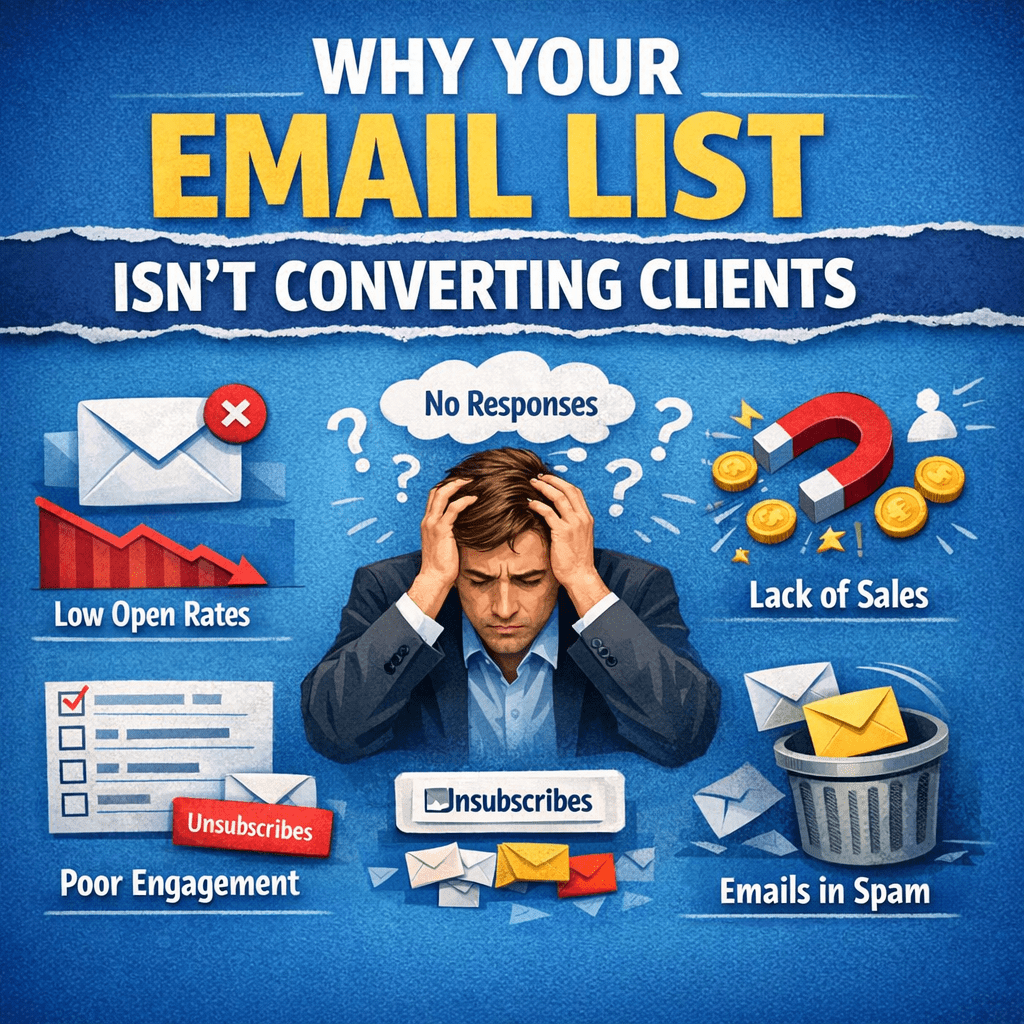
Email marketing tools like HubSpot, ActiveCampaign, Mailchimp, or Klaviyo can help you build fast follow-up. For service businesses, simple automation is often enough.
A lead should get an immediate confirmation, a next-step email, and a follow-up sequence if they do not respond. That alone can lift results.
Landing pages and testing
Use landing page builders or your website CMS to test one offer at a time. Don’t send all traffic to a general homepage if you can avoid it.
Run simple A/B tests on headlines, CTAs, form length, and proof placement. Small changes can create big lifts in improve ad conversions performance.
Internal Linking Opportunities
If you are fixing ads not generating leads, the next step is usually not another ad tweak. It is a stronger system.
That often includes:
- SEO services to capture demand without constant ad spend
- Website design that improves conversion rate and mobile experience
- Email marketing to automate follow-up and nurture leads
- Paid ads management to tighten targeting and tracking
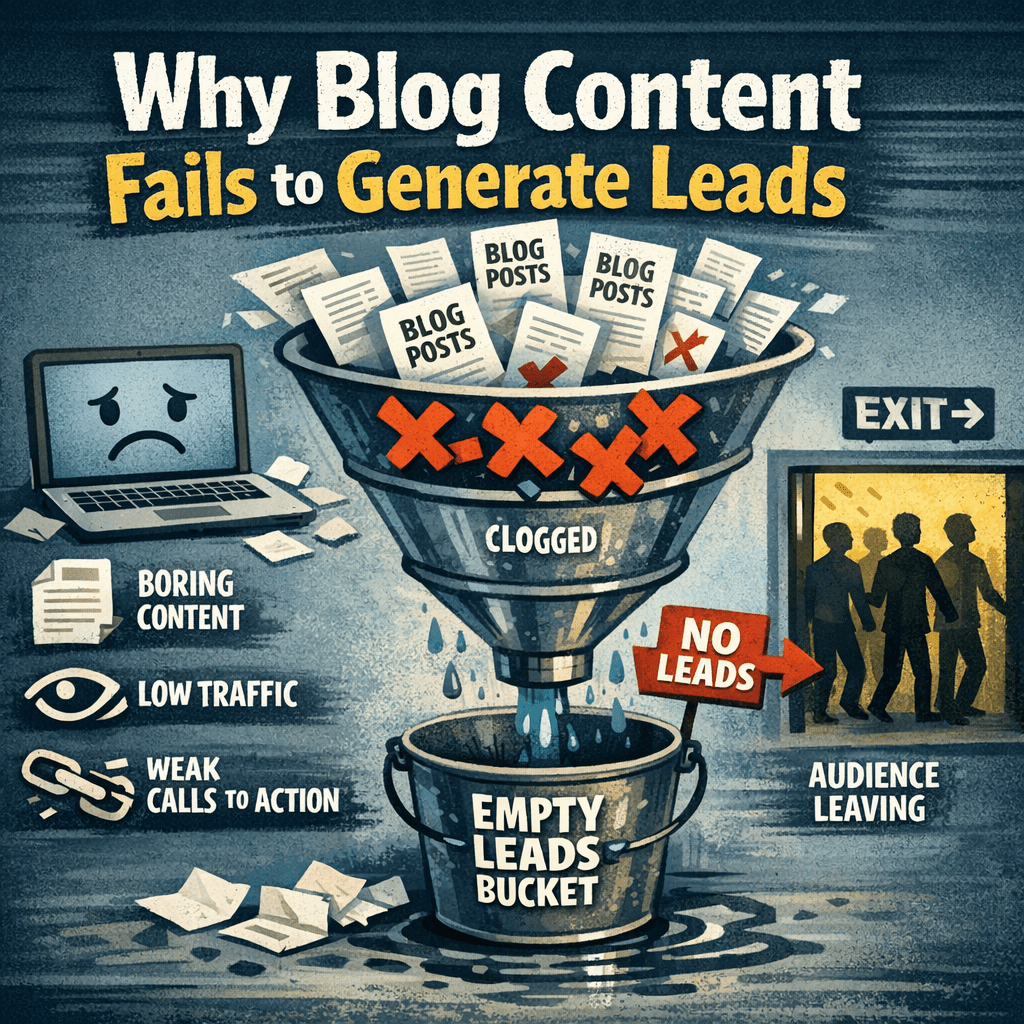
- Content marketing to build trust before the click
The best agencies connect these pieces instead of treating them like separate services. That is how you build a lead engine, not just a traffic source.
Pro Tips Most Agencies Don’t Tell You
Speed matters more than perfection
Many campaigns fail because teams spend too long polishing the wrong thing. A clear offer, fast page, and strong follow-up usually beat a “perfect” campaign that launches late.
The real advantage is execution speed. Test, learn, refine, repeat.
Use AI to draft, not decide
AI can help you generate ad variations, landing page copy, follow-up emails, and FAQ content quickly. That saves time.
But AI should not replace strategy. You still need a human understanding of what your customer fears, wants, and trusts. Use AI for speed, then apply judgment.
Build for response, not just visibility
A lot of ads look good and still fail because they are built for branding, not response. If your goal is leads, everything should push action.
That means a direct headline, one main CTA, proof near the top, and a simple path to contact. If it’s not helping the visitor say “yes,” it’s probably hurting you.
FAQs
Why are my ads not generating leads?
Usually because of a broken funnel. The ad, landing page, offer, targeting, or follow-up is not aligned.
Why are my ads not converting even with clicks?
Clicks only show interest. If the page is slow, unclear, or low trust, visitors leave without becoming leads.
How long does it take to fix ad performance?
Clicks only show interest. If the page is slow, unclear, or low trust, visitors leave without becoming leads.
Is this worth it for small businesses?
Simple fixes can help in days. Bigger improvements usually take 2 to 6 weeks of testing and refinement.
What should I fix first?
Start with the offer and landing page. Then check tracking, targeting, and follow-up.
Should I stop ads if they are not working?
Not always. First find what is broken. Many campaigns need restructuring, not cancellation.
What tools should I use?
Use Google Ads or Meta Ads, GA4, Google Tag Manager, an email automation tool, and a strong landing page builder or website CMS.
Conclusion
If your ads not generating leads problem is still happening, don’t assume you need more budget. In most cases, the real issue is a broken funnel: weak offer, poor message match, slow follow-up, or a landing page that loses trust too early. Once you fix those parts, paid traffic becomes much easier to turn into calls, form fills, and real revenue.
The fastest wins usually come from clarity, speed, and simplicity. Make the offer obvious, reduce friction, prove credibility, and respond faster than your competitors. That is how you stop wasting spend and start getting measurable results.
If you want a practical system built for leads, not vanity metrics, now is the time to tighten the funnel and fix what’s broken. Do that, and your ads can start pulling their weight again.
We would love to hear from you!
Contact us about your digital marketing needs and let's team up to grow multi-folds together!